

If you’ve already got some basic architecture photography kit and have started to get clients on your books then you can start looking at either upgrading some of your kit or adding to your existing kit.
(I’m going to be basing this on the fact you have already ready through my beginner architecture kit post and have all the items there)
The first thing I would look at investing in is another lens.
With a wide angle already in your kit bag, it’s time to add a bit more zoom and some specialty lenses to your arsenal.
Advanced Lenses for Architecture Photography
If you have already ticked off the basics of a wide angle lens and want to add some more architecture specific lenses, here are a couple I would suggest:
Canon EF 24-105MM for Architecture Photography
Wide angles are great but you’ll soon need to get a little closer to your subject, something equivalent to a 24-105mm is the perfect range for this.
This focal length will allow you to capture nice little vignettes or where space allows, taking some of the distortion you would get from using a wide angle lens by using a longer focal length.
- Zoom Lens
- 24-105 focal length
- Image stabilised
- Canon EF lens mount
- Maximum aperture f4
- Minimum aperture f22
- Minimum focus distance 0.45m
- Maximum magnification 0.24x
- Weight – 795g
- Length – 118mm
If you are really ready to jump head first into your gear choice then I would really recommend picking up a tilt-shift lens.
If you’re not sure how to use them, check THIS post out.
Canon 24mm TS-E for Architecture Photography
Using tilt-shift lenses has revolutionised the way I shoot and 95% of the work I do is with them now.
They’re a little harder to get used to compared to a normal lens, the lack of auto-focus may put some people off but what they do is simply amazing and can’t be achieved with any other lens.
- Fixed Lens
- 24mm focal length
- Not image stabilised
- Canon EF lens mount
- Maximum aperture f3.5-4.5
- Minimum aperture f22-27
- Minimum focus distance 0.24m
- Maximum magnification 0.17x
- Weight – 780g
- Length – 107mm
Full Frame Cameras for Architecture Photography
To get the most out of these new lenses you’ll be looking to upgrade your camera.
If you currently have a cropped sensor camera, such as the 90D I recommended, you will notice a considerable jump in quality going to a full frame camera.
Larger pixels mean more detail and the colours render a lot better for me on a full frame camera.
There’s a couple of options here; buy an older model, save your money for more lenses or buy the latest and greatest.
We’ll start with my recommendation for an older full frame camera for architecture photography.
Canon 5DS R for Architecture Photography
The 5DS R is now a seven year old camera but features a huge 50.6 megapixel CMOS sensor which still stands up to today’s needs.
Compared to camera releases over the last few years it’s a very no frills camera but packs absolutely everything you will need to shoot architecture photography.
Including, a mirror vibration control system, designed to cut down vibration caused by the camera’s shutter which allows you to capture sharper images and a low pass cancellation filter which optimises sharpness and clarity.
- 36 x 24mm CMOS Sensor
- 50.6 Effective megapixels
- Canon EF lens mount (excludes EF-S/EF-M Mount)
- 61 Point AF
- ISO 100-6400
Canon EOS R5 for Architecture Photography
If you’re looking to buy the latest camera, then you’re going to be looking at getting a mirrorless system.
The Canon EOS R5 is the latest offering from Canon which packs a huge amount of tech into what is a very small camera.
Most of it isn’t really relevant to architecture photography, in fact if I got asked to shoot 8k video I would run a mile, but it’s a very capable camera and the images it produces are fantastic.
- 36 x 24mm CMOS Sensor
- 45 Effective megapixels
- Canon RF lens mount (EF and EF-S lenses can be attached using Mount Adapter EF-EOS R )
- 5940 Point AF
- ISO 100-51200
The Ultimate Tripod for Architecture Photography
My final suggestion is going to be to upgrade your tripod, I spent a couple of years on a dodgy cheap tripod and upgrading to a solid carbon fibre tripod a few years ago has been amazing.
I’ve written a bit more about my tripod set up here but if money was no object, here is what I would go for:
Gitzo Systematic Series 5 Giant for Architecture Photography
The Gitzo systematic series are right at the top of the line when it comes to tripod quality.
There’s a load of models in the range, going from your standard tripod way up to “Series 5 Giant” which is where I would be looking.
The benefits of this tripod, as well as being carbon to keep the weight down and give you a more rigid base it’s it extends to a massive 278cm so if you have a tricky shot you need to get, this trip is the way to do it!

- 3560g weight
- Load capacity of 40kg
- 6 leg sections
- 10cm minimum height
- 278cm maximum height
- 73cm close length
The Arca Swiss Cube C1 for Architecture Photography
With such an amazing tripod, you need a tripod head to match!
The Arca Swiss C1 Cube is the Rolls Royce of the tripod head world, it’s a geared head meaning you can control each movement down to the smallest details.
Where a traditional head works by loosening off a handle and repositioning the camera almost by eye, a geared head allows you to twist a tensioned knob and move the camera in really small increments with none of the sag which is related to tightening up a traditional tripod head.
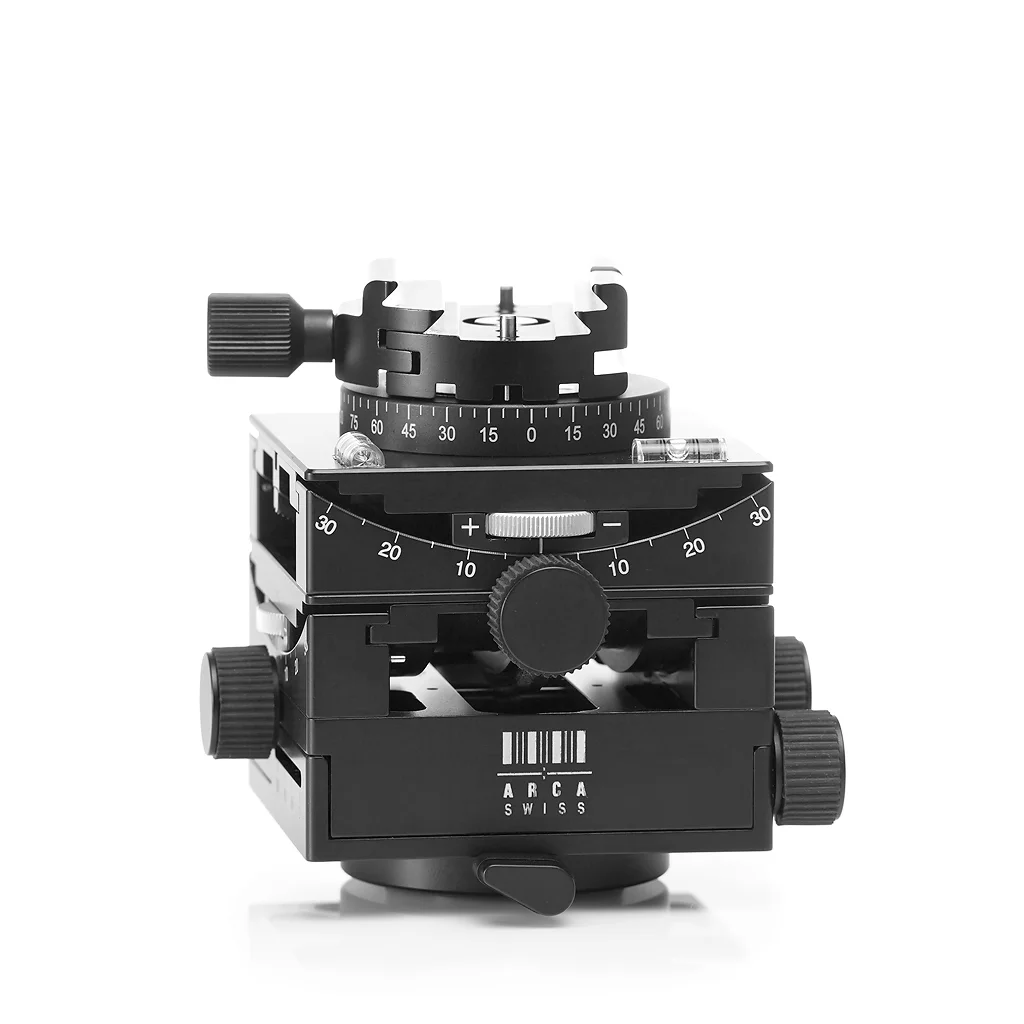
1040g weight
Load capacity of 40kg
±28° x-y geared axes
Third 62° tilt-only axis underneath geared adjustments
That’s all the gear I would add to my architecture photography kit bag, is there something else you would add?
Drop a comment below with your suggestions.
 Hi, I’m Jak. I’m a photographer based in Manchester, UK who specialises in photographing interiors and architecture.


